Correo del Sur – JULY 2026
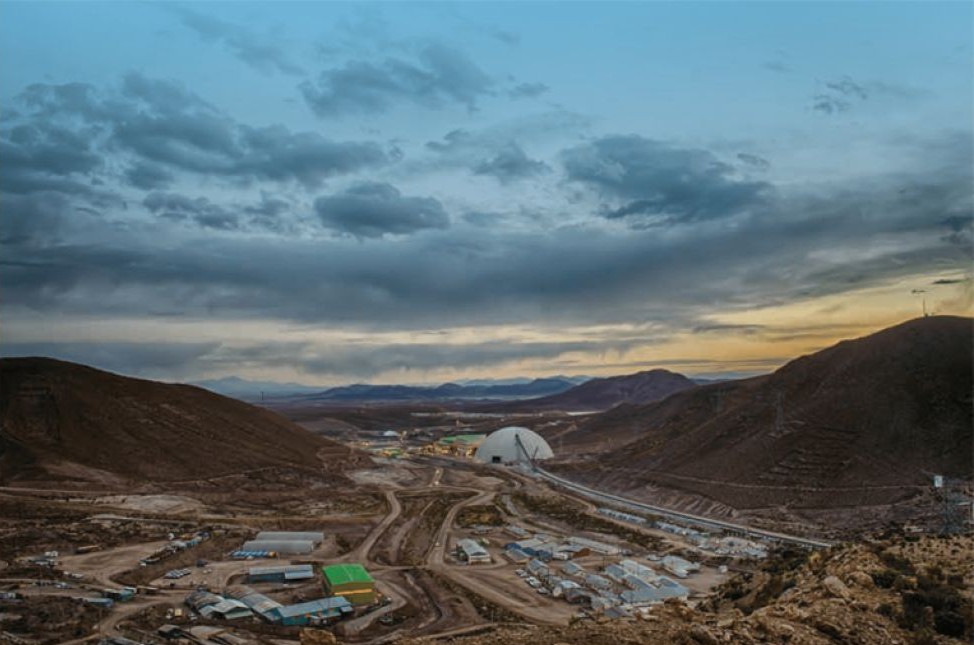
In southwestern Potosí, where the landscape combines the high plateau, salt flats, vast open roads, and communities with a long history deeply connected to the land, Minera San Cristóbal (MSC) operates as one of Bolivia’s leading producers of zinc, lead, and silver.
Few days ago, the company presented its 2025 Sustainability Report, a document that summarizes its key economic, environmental, and social achievements. The report was prepared in accordance with the Global Reporting Initiative (GRI) Standards and the assurance principles of the International Council on Mining and Metals (ICMM). It also underwent independent verification by Deloitte, one of the world’s largest auditing firms.
The report illustrates how a large-scale mining operation can contribute to Bolivia’s development by combining productivity, regulatory compliance, social investment, environmental stewardship, and strong community engagement. Its central message is straightforward: sustainability is not simply declared—it is managed.
An Operation that Contributes to the Country
The report also highlights significant growth compared with 2024, driven primarily by stronger international commodity prices and improved operational efficiency. For the company, these results reaffirm both the strength of its operations and the importance of maintaining a long-term vision.
In 2025, MSC contributed more than US$314 million in taxes, royalties, and mining fees, making a substantial contribution to Bolivia’s public revenues and economic development.
The report further notes that the company purchased more than US$469 million in goods and services, benefiting 1,248 suppliers. This demonstrates that mining activity extends well beyond the boundaries of the operation itself, generating economic activity in transportation, catering, maintenance, specialized services, trade, logistics, and many other sectors that form part of an extensive value chain.
For goods procurement, 41% of purchases were made from Bolivian suppliers and local communities. In services, local participation was even higher, with 82% of contracts awarded to Bolivian providers, including communities within the company’s area of influence. In practical terms, this translates into employment, the circulation of financial resources, and stronger business capabilities across different regions of the country.
Efficient Production
MSC’s operation is located in Nor Lípez Province, within the municipality of Colcha K in the Department of Potosí. The deposit is characterized by low ore grades and large volumes, making its exploitation dependent on high levels of planning, advanced technology, operational control, and efficiency. In 2025, the company produced 345,000 wet tonnes of zinc-silver concentrate and 89,000 wet tonnes of lead-silver concentrate.
On average, the operation processed 1,228 tonnes of concentrate per day. Behind this figure lies an extensive production chain that includes drilling, blasting, loading, hauling, crushing, grinding, flotation, filtration, logistics, and export activities. Operational utilization reached 97%, and during 2025 the company shipped 437,303 tonnes of concentrates through port facilities.
However, productive efficiency is not measured solely by production volumes. For MSC, producing more also means operating responsibly, under rigorous standards and effective controls. For this reason, the report integrates operational indicators with environmental, social, labor, and governance performance. This integrated approach reflects the company’s view of sustainability as a comprehensive management model rather than a standalone chapter.
Responsible Resource Management
The report explains that the industrial water used in MSC’s operations is naturally saline and unsuitable for human consumption, livestock, or irrigation. The company emphasizes that its water management strategy is based on responsible use, operational efficiency, and process water recovery. During 2025, 7.34 million cubic meters of water were recovered from the tailings storage facility, equivalent to 45% of the water used in the concentrator plant. Specific industrial water consumption remained at 0.44 cubic meters per tonne of ore processed, making it one of the most efficient indicators in the mining industry.
Regarding energy, the report notes that total energy consumption increased by 2.46% compared to the previous year, primarily due to the higher volume of ore processed. The company’s energy mix consisted of 55% diesel, 44% electricity, and 0.81% gasoline.
Waste management also remains a key component of MSC’s environmental strategy. In 2025, the company managed 3,222 tonnes of non-mining waste. Of this total, 65% was recycled, reused, or composted, while the remaining 35% was sent for final disposal. Simply put, more than half of the waste generated was given a second life before reaching disposal facilities.
The report also highlights the company’s land rehabilitation and remediation efforts. Since 2007, MSC has implemented a revegetation program in areas affected during both the construction phase and mining operations. By the end of 2025, the company had rehabilitated a cumulative 91.28 hectares. These efforts aim to restore, as far as possible, the traditional use of the land while preserving local ecosystems.
Communities: Investment, Dialogue, and Shared Development
Relationships with local communities remain one of the central pillars of MSC’s 2025 Sustainability Report. During the year, the company invested more than US$918,000 in initiatives aimed at strengthening the communities within its area of influence. These resources supported productive development projects, impact mitigation and resettlement programs, community engagement, basic services, infrastructure, healthcare, technical assistance, and education.
Among the most significant productive development initiatives were projects focused on quinoa production, camelid farming, and tourism. In agriculture, the company implemented its Agricultural Capacity Development Program using 4.0 technologies, including pilot greenhouses and fertigation systems designed to improve quinoa production. In the camelid sector, MSC promoted initiatives to strengthen both the production and processing of llama meat. In tourism, the company continued supporting local capacity-building initiatives aimed at unlocking the region’s tourism potential.
In education, the report highlights the graduation of 118 mid-level technical professionals in five specializations through the San Cristóbal Alternative Education Center (CEA). The impact of these achievements extends well beyond the classroom, providing young people and adults with greater opportunities to secure employment, launch their own businesses, and contribute to the development of their communities.
In healthcare and social development, MSC further strengthened the “Health, Rights, and Empowerment of Adolescents and Women in the Municipality of Colcha K” project in partnership with the United Nations Population Fund (UNFPA). As part of this initiative, the Comprehensive Adolescent Care Program (AIDA) was accredited at the health centers in San Cristóbal and Río Grande. In addition, Comprehensive Student Support Offices (GAIE) were established in schools located in San Cristóbal, Culpina K, Vila Vila, and Río Grande.
Safety and Health
A modern mining operation cannot claim to be sustainable without placing the safety and well-being of its people at the center of its business. In 2025, MSC recorded zero workplace fatalities and zero occupational illnesses.
Throughout the year, the company accumulated nearly three million hours without safety incidents affecting its workforce, reflecting strong operational discipline, continuous training, effective risk management, and a well-established culture of prevention. MSC also strengthened its occupational health, ergonomics, and radiation protection programs.
Training remained another key priority. During 2025, the company delivered 20,319 hours of training. MSC employs 1,344 direct employees, while an additional 2,886 people work through contractor companies, bringing the total workforce supporting the operation to 4,230 people. In a highly technical industry such as mining, continuous learning and professional development are essential to maintaining safe and efficient operations.
The company’s health management program also achieved outstanding results. Periodic medical examinations reached 99% workforce coverage. At MSC, safety is viewed as far more than a set of procedures or regulations—it is a way of working. It is built on prevention, leadership, safe behaviors, and a shared conviction that no production target is ever more important than protecting people’s lives and health.
Human Rights, Standards, and Transparency
Throughout 2025, MSC continued strengthening training and evaluation processes across its supplier network, covering topics such as child labor, forced labor, gender equality, discrimination, and workplace harassment. The company also maintains internal policies and mechanisms designed to prevent conduct that is inconsistent with its values and applicable regulations.
With respect to certifications and external commitments, MSC is a member of the International Council on Mining and Metals (ICMM), an organization that promotes principles and position statements for responsible mining. The company also holds five ISO certifications, two aviation-related certifications, certification as an Authorized Economic Operator (AEO), and recognition as a Healthy Company. In addition, MSC has received acknowledgements for best practices in human resources management, including the Top Employer certification.
A Roadmap for the Future
MSC views 2025 as a year of consolidation, one in which the company strengthened its foundations, overcame key challenges, and laid the groundwork for a new phase of sustainable growth. Ongoing drilling and exploration activities within the mine and surrounding areas have contributed to extending the operation’s mine life.
Overall, the 2025 Sustainability Report presents a comprehensive picture of MSC: a mining operation with a significant economic contribution, an extensive value chain supported by Bolivian suppliers, environmental management driven by measurable performance, community programs focused on building local capabilities, and a safety culture that places people first. At a time when society increasingly demands transparent, reliable, and verifiable information, the true value of this report lies in opening the company’s management practices to public scrutiny. Because when sustainability is taken seriously, it is more than a promise—it is demonstrated through results, communicated with transparency, and built every single day.
https://correodelsur.com/ecos/20260705/minera-san-cristobal-sostenibilidad-con-resultados.html