COSAS MAGAZINE – FEBRUARY 2026
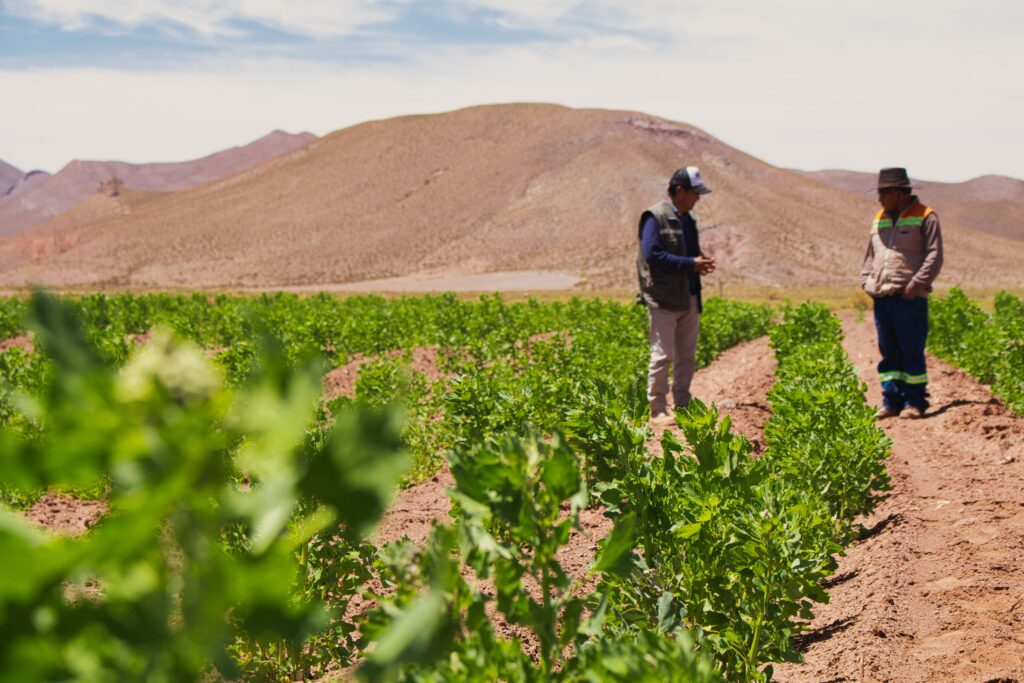
Our work with local communities aims to foster sustainable development by building local capacities, promoting partnerships, and delivering measurable results in education, healthcare, environmental stewardship, and local economic development.
As part of the COSAS Sustainability Special Edition, Minera San Cristóbal S.A. (MSC) reaffirms its commitment to a social and environmental management model that prioritizes dialogue, shared responsibility, and capacity building throughout its direct area of influence. At MSC, sustainability is translated into plans, agreements, and measurable actions that strengthen local development over the long term. In 2025, compliance with community agreements and cooperation commitments reached 85.84%, with a strong focus on basic services, education, and impact mitigation, reinforcing relationships built on trust and collaboration. A key driver of this territorial approach is the Los Lípez–San Cristóbal Advisory Council, which coordinates long-term social and productive initiatives across the region.
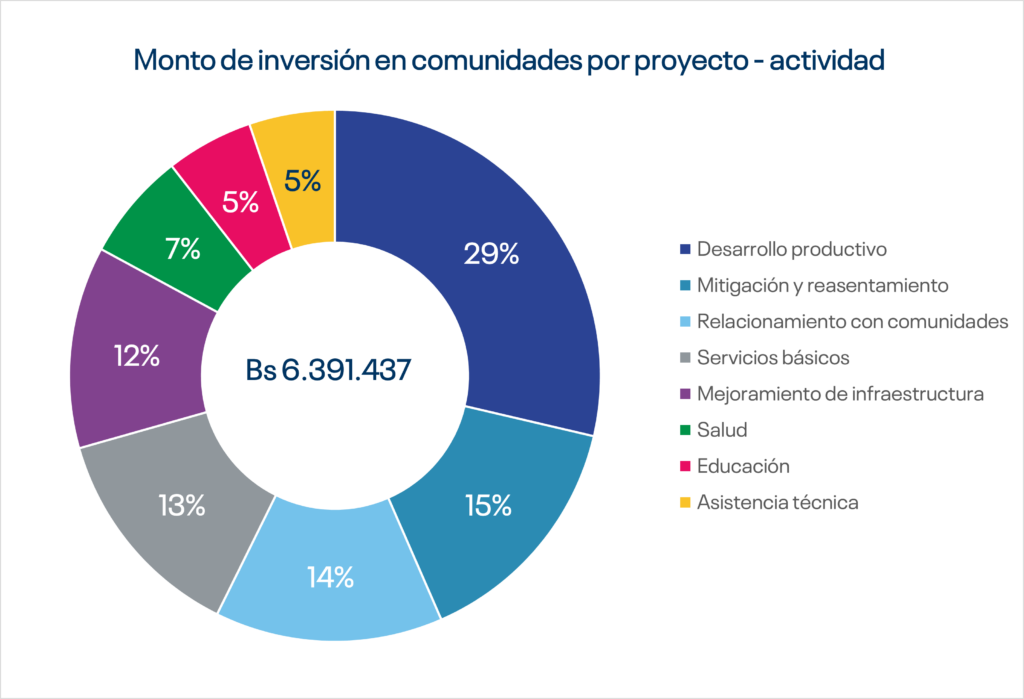
This commitment is also reflected in strategic social investment. During 2025, MSC invested more than Bs 6.3 million in projects focused on technical assistance, stakeholder engagement, impact mitigation, basic services, education, healthcare, and productive development, with the goal of strengthening local capacities and achieving measurable outcomes.
When productive development succeeds, the results are evident on the ground: stronger organizations, better tools, and greater opportunities for families. In 2025, MSC supported projects related to quinoa production, camelid farming, vicuña conservation, and tourism, complemented by technical training and strategic partnerships.
In quinoa production, technical support and operational planning were strengthened, while a comprehensive value chain study was completed to provide key inputs for future decision-making. At the same time, partnerships were established with public and private organizations—including Orkidea Andina, PROCAMQUI, IRUPANA Andean Foods, Mundo Orgánico, and the Colcha K Municipal Government—to implement a program featuring pilot greenhouses, fertigation systems, and the joint acquisition of an optical grain sorting machine.
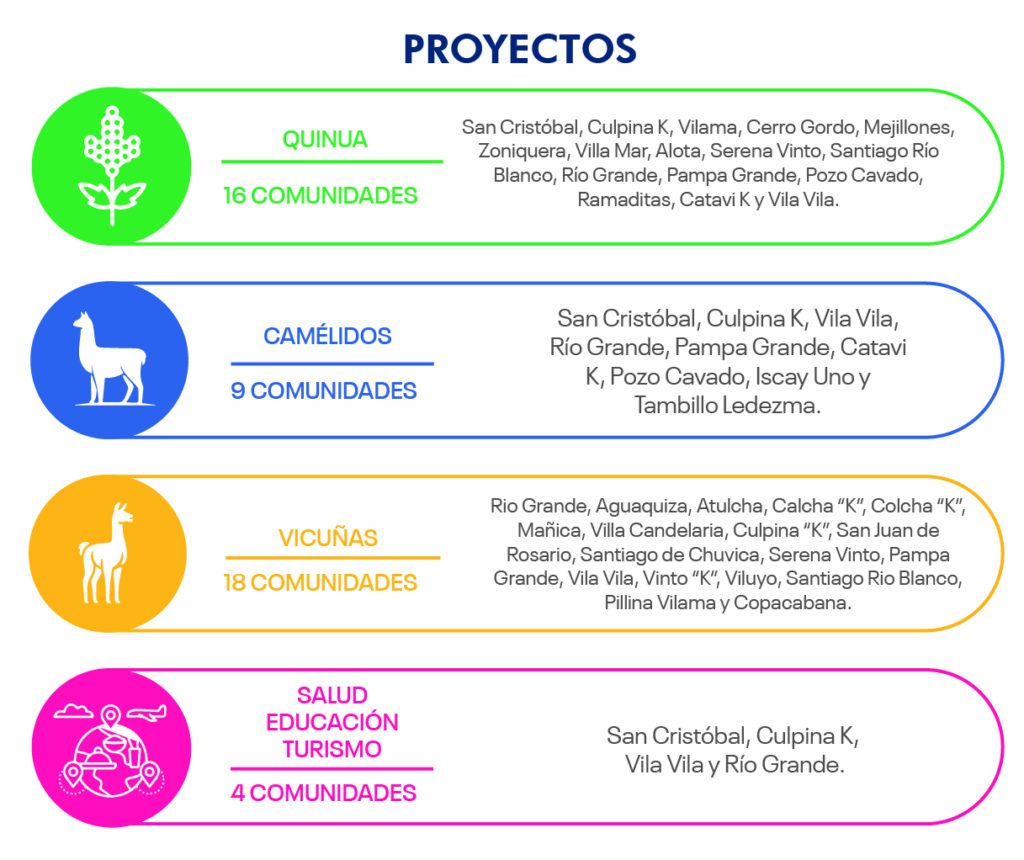
In the camelid sector, through APROSAC, technical and commercial operations at the slaughtering and processing facilities continued successfully. During 2025, 397 llamas were processed, producing 1,442 kilograms of charque (traditional dried meat), as well as premium meat cuts and camelid sausages, strengthening a local value-added production chain that gained recognition at both departmental and national trade fairs.
In vicuña conservation, theoretical and practical training workshops and field campaigns enhanced local capabilities. Despite adverse weather conditions, activities were successfully carried out in 10 of the 18 planned communities, where 569 vicuñas were shorn, producing 136.9 kilograms of raw fiber while fully complying with animal welfare standards.
In tourism, a specialized value chain study guided efforts to strengthen skills in customer service, social media management, handicrafts, specialized gastronomy—including barista and artisanal ice cream training—and soft skills, with particularly strong participation by women entrepreneurs.
Development is also measured through tangible opportunities for people: education that improves employability, healthcare that protects communities, and prevention that strengthens resilience. During 2025, MSC expanded the reach of its social initiatives together with the Advisory Council and strategic partners.
In education, one of the year’s major milestones was the graduation of 118 mid-level technical professionals in five specializations through the San Cristóbal Alternative Education Center (CEA), strengthening competencies in production and processing, gastronomy, and textile-related fields. MSC also supported formal education by providing specialized teachers and awarded 15 scholarships to outstanding high school graduates to pursue higher education.
In healthcare, MSC implemented the “Health, Rights, and Empowerment of Adolescents and Women” project in partnership with UNFPA. This initiative successfully accredited the Comprehensive Adolescent Care Program (AIDA) at the health centers of San Cristóbal and Río Grande, while also establishing Comprehensive Student Support Offices (GAIE) in the schools of San Cristóbal, Culpina K, Vila Vila, and Río Grande. Additional initiatives included multi-program community fairs and oral healthcare campaigns.
Complementing these efforts, a competitive financing fund established in partnership with PRODEM and the Advisory Council approved and disbursed 23 loans totaling Bs 1,014,580 to support local entrepreneurs in San Cristóbal, Culpina K, and Vila Vila.
Community environmental management also remains an integral part of MSC’s daily work. In collaboration with environmental committees and local authorities, the company recorded an average waste generation rate of 24.9 kg per person per month in 2025, strengthened PET bottle collection by baling 4,623 kilograms and selling 650 kilograms for recycling, and promoted the use of reusable eco-friendly bags. At the same time, initiatives focused on water management and green areas expanded vegetation coverage to 7 hectares through new plantations and irrigation system improvements. Through a management approach based on shared responsibility, careful planning, and collaborative work, Minera San Cristóbal continues to strengthen its contribution to local development through projects that create lasting social, economic, and environmental value. The company’s commitment remains clear: to continue creating opportunities across the region through a sustainable, transparent, and results-oriented approach.
https://issuu.com/carlatejerina/docs/cosas_febrero_2026/22